A good used motorcycle is one of the best-value buys in New Zealand – but a bad one can cost you thousands. Hidden finance, a crash history, a dodgy odometer or a neglected engine are all common, especially in private sales.
This checklist walks you through everything to check, from the paperwork you can do at home to what to look for when you see the bike, and how to complete the sale properly.
This is a general guide, not legal or financial advice. Rules and fees can change – check NZTA Waka Kotahi, the PPSR and Consumer Protection for the latest.

Before you go: checks you can do from home
1. Get the plate and VIN
Ask the seller for the registration plate number and the VIN (vehicle identification number) or frame number. A genuine seller won’t hesitate. If they refuse, walk away.
2. Run a PPSR check – the most important step
The Personal Property Securities Register (PPSR) shows whether anyone has a security interest in the bike – usually a finance company. If the seller still owes money and you buy it, the bike could be repossessed from you, even though you paid for it.
A PPSR search costs only a few dollars and takes minutes at the PPSR website. Search the VIN or frame number, the registration and, if you like, the seller’s name. Confirm the make, model and year in the results match the bike in front of you.
If you’re buying from a registered motor vehicle trader, they must tell you if money is owed. It still doesn’t hurt to check.
3. Check it isn’t stolen
NZ Police has a free online stolen vehicle search. Enter the plate number and check it hasn’t been reported stolen.
4. Check the registration and WoF
Use the NZTA Waka Kotahi online tools to check that the plate matches the bike’s make and model, and that registration (rego) and the Warrant of Fitness (WoF) are current. Note when each expires – you’ll need to budget for renewing them.
5. Consider a vehicle history report
Paid reports from services such as CarJam pull together registration, odometer readings at past WoF inspections, import history and money-owing checks. Odometer readings taken at WoF time are especially useful: if the reading jumps backwards or stalls for years, ask questions.
6. Research the model
Every bike has known weak points – a cam chain tensioner, a regulator/rectifier, fork seals, or a particular recall. Search owner forums and check for any manufacturer recalls before you go.
At the viewing: inspecting the bike
Tip: view in daylight, ideally when it isn’t raining, and ask for the engine to be cold when you arrive. A seller who has “warmed it up for you” might be hiding a starting problem.
Paperwork and identity
- Check the VIN or frame number on the bike matches the one you searched.
- Ask to see the seller’s ID and make sure their name matches the registered owner (or that they have a good reason it doesn’t).
- Ask for the service history, receipts and the owner’s manual. Regular servicing is a good sign.
- Ask how many keys come with it – replacement keys, especially for bikes with immobilisers, can be expensive.
Cold start and engine
- Does it start easily from cold, and idle smoothly once warm?
- Listen for knocking, rattling or ticking – especially from the top of the engine.
- Look for smoke from the exhaust. Blue smoke can mean worn rings or valve seals; persistent white smoke on a water-cooled bike can point to a head gasket problem.
- Check for oil leaks around the engine cases, sump and head.
- On water-cooled bikes, check the coolant level and colour.
Chain, sprockets and drive
- Check chain slack and look for tight spots or rust.
- Hooked or pointed sprocket teeth mean the chain and sprockets need replacing soon – usually a few hundred dollars fitted.
- On shaft-drive bikes, check for oil leaks at the final drive.
Tyres and brakes
- Check tread depth (1.5 mm minimum legally) and look for cracking or uneven wear.
- Check the date code on the tyre sidewall – tyres over five or six years old can harden even if they have plenty of tread.
- Check brake pad thickness and look for scoring on the discs.
- Brake fluid should be clear or light amber, not dark brown.
Suspension and steering
- Look for oil on the fork legs – a sign of leaking fork seals.
- Push down on the front and rear. The bike should compress and return smoothly without bouncing.
- With the front wheel off the ground (or on the centre stand), turn the bars lock to lock. They should move smoothly with no notchy spots, which can indicate worn steering head bearings.
Signs of a crash
- Scrapes on bar ends, levers, footpegs, mirrors, engine cases and the exhaust.
- Bent levers, bent footpegs, or bars that don’t sit straight.
- New fairings or bodywork on an otherwise worn bike, or panels that don’t line up.
- Look along the frame and swingarm for cracks, kinks or fresh paint.
Some scuffs from a low-speed drop are normal. A big crash, especially one that bent the frame or forks, isn’t.
Electrics
Check every light, the indicators, horn, dash warning lights, and any electronics such as ABS, traction control and heated grips. Look for messy aftermarket wiring under the seat.
The test ride
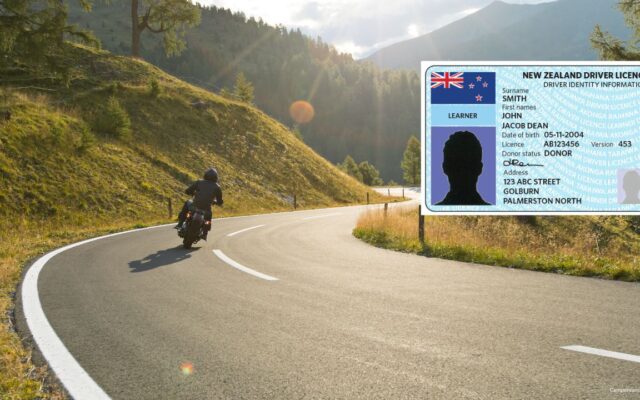
- Insurance and licence: make sure you’re legally allowed to ride the bike on your licence class (LAMS restrictions apply on a learner or restricted licence) and agree with the seller what happens if you drop it.
- Expect the seller to want something as security – usually cash or your car keys. That’s reasonable.
- Wear your full gear.
- Check the clutch doesn’t slip under hard acceleration and that gears change cleanly.
- The bike should track straight and not pull to one side, even with a relaxed grip on the bars.
- Brakes should feel firm and stop the bike in a straight line.
- After the ride, look again for leaks and listen for new noises.
Private sale vs dealer
Buying from a registered dealer usually costs more, but the Consumer Guarantees Act and Fair Trading Act apply. The bike must be of acceptable quality and match its description, and the dealer must display a Consumer Information Notice with details including whether money is owed on it.
Buying privately is usually cheaper, but the Consumer Guarantees Act doesn’t apply – it’s largely “buyer beware”. That’s why the checks above matter so much. The seller still can’t lie to you about the bike, but proving it after the fact is hard.
Get a pre-purchase inspection
For anything expensive, paying a motorcycle mechanic for a pre-purchase inspection is money well spent. A reasonable seller won’t object. If they refuse, ask yourself why.
Doing the deal
- Negotiate on facts. Worn tyres, a tired chain or an upcoming service are fair reasons to ask for a lower price.
- Get a written receipt or sale agreement with both names, the date, price, plate, VIN, odometer reading, and a statement that the bike is sold free of any security interest.
- Pay safely. Bank transfer leaves a record. Avoid carrying large amounts of cash and be wary of anyone asking you to pay before you’ve seen the bike.
- Change of ownership: the seller should notify NZTA as soon as the bike is sold, and you as the buyer must also notify NZTA within seven days and pay a small fee. You can do both online.
- Insure it before you ride it home.
Red flags: walk away if…
- The PPSR check shows money owed and the seller can’t clear it before the sale.
- The VIN or frame number has been tampered with or doesn’t match the paperwork.
- The seller isn’t the registered owner and can’t explain why.
- They won’t let you see the bike at their home, or insist on meeting in a car park.
- The price is far below market value and they want a quick sale.
- They refuse a test ride or an inspection, even with security offered.
Quick printable checklist
- Plate number and VIN from the seller
- PPSR search – no money owing
- Police stolen vehicle check
- Rego and WoF status checked
- History report (optional) – odometer readings look consistent
- Seller ID matches registered owner
- Service history and keys
- Cold start, idle, no smoke or leaks
- Chain, sprockets, tyres and brakes
- Forks, shock and steering head bearings
- No signs of a major crash
- All electrics working
- Test ride: clutch, gears, brakes, tracks straight
- Written receipt, safe payment, change of ownership done
- Insurance in place before you ride away
Take your time, do your checks, and don’t let a seller rush you. There’s always another bike.
Selling instead? Use this list to get your bike ready – buyers will appreciate service records and a clean PPSR check.