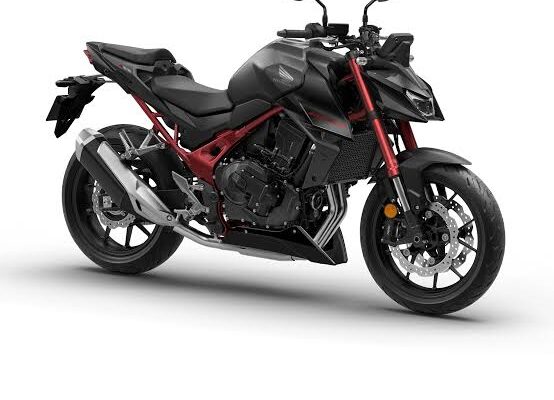
At $15,990 plus on-road costs, the 2026 Triumph Trident 660 costs only a little more than the bike it replaces. In return you get a heavily reworked triple with 95hp and a much higher redline, plus a quickshifter, cruise control and cornering ABS as standard. The engine is now the best thing in the class. The chassis hasn’t quite kept up.
What is it?
The Trident 660 launched in 2021 as Triumph’s entry-level roadster. It quickly became a strong alternative to the Japanese middleweight twins. The 2025 update added an IMU, cornering ABS and lean-sensitive traction control. For 2026, Triumph went further:
- three throttle bodies instead of one, plus revised internals
- power up from 81hp to a claimed 95hp
- a redline raised to 12,650rpm
- a new Showa rear shock with preload and rebound adjustment
- an upgraded slipper clutch and revised gearing
- cosmetic changes and new colours
A LAMS version of the Trident 660 is also sold in NZ, and Triumph’s NZ site currently lists the outgoing 2025 model and the LAMS bike from $14,990. Check with your dealer for runout deals.

The engine: the reason to buy one
The inline triple now makes a claimed 70kW (95hp) at 11,250rpm and 68Nm at 8,250rpm. Triumph says 80% of peak torque is available from 3,000rpm, so it’s still easy to ride slowly. The difference is at the top. The old engine flattened out early. The new one pulls hard to the redline and sounds great doing it.
NZ testing described the extra power as transformative. It turns the Trident from a friendly commuter into a bike that’s exciting on a good road. Throttle response stays smooth and the clutch is light, so it hasn’t lost its approachability for newer full-licence riders.
NZ testing recorded about 4.9L/100km, which gives roughly 240–290km from the 14L tank.
Chassis and handling
The steering is light and agile, and the bike is easy to place in corners. The steel frame and geometry are largely unchanged.
The new rear shock is an improvement, but the front end is where the limits show. The 41mm Showa forks are soft and non-adjustable. Ridden hard, especially on bumpy NZ roads, the front end can’t keep up with what the engine is now capable of. The Michelin Road 5 tyres are excellent all-rounders and good in the wet, but testers found they lacked feel when pushed.
For everyday riding and brisk back-road pace, none of this matters much. If you plan to ride hard, budget for fork upgrades.
Weight and seat height
Claimed wet weight is 195kg, up 5kg. That’s still light for a triple. The 810mm seat is approachable, and a 785mm low seat is available for shorter riders.
Brakes
- front: twin 310mm discs with two-piston sliding calipers
- rear: a single 255mm disc
- cornering ABS front and rear
On paper, two-piston sliding calipers look basic next to the radial four-pots on the MT-07 and CB750 Hornet. In practice, testers describe the brakes as progressive and well suited to the bike. The cornering ABS is a real safety advantage over both of those rivals.
Electronics: best in class
This is where the Trident pulls ahead. Standard equipment includes:
- Rain, Road and Sport riding modes
- lean-sensitive (cornering) ABS and traction control
- an up-and-down quickshifter
- cruise control
- Bluetooth connectivity with turn-by-turn navigation
Most rivals charge extra for some of these, or don’t offer them at all. The one weak spot is the circular dash, carried over from 2021. It works, but it won’t suit everyone’s taste.
Comfort and practicality
The riding position is upright and relaxed, with a comfortable reach to the bars. As with any naked, there’s no wind protection, so long motorway stints are tiring. Cruise control helps on long open-road runs. Service intervals are a generous 16,000km or 12 months.
Ownership considerations
Build quality is consistently praised. Triumph has a solid NZ dealer network, though it’s smaller than Honda’s or Yamaha’s. The two-year warranty matches the class. Resale values for the Trident have been reasonable, helped by the LAMS version keeping demand strong.
The verdict
What’s good:
- thrilling, much more powerful triple
- still easy and friendly at low speeds
- quickshifter, cruise control and cornering ABS as standard
- light, agile steering
- strong build quality and long service intervals
- approachable seat height, with a low-seat option
What’s not:
- soft, non-adjustable forks
- chassis is outclassed by the engine when ridden hard
- tyres lack feel at the limit
- dated circular dash
- no wind protection
Bottom line: The 2026 Trident 660 is one of the best-value middleweight nakeds in New Zealand. Nothing else at this price combines this much engine character with this much standard tech. Compared with the Honda CB750 Hornet, it trades a little torque for more electronics and a more exciting top end. If you’re a hard-riding expert, set money aside for suspension. Everyone else should book a test ride and hold it to the redline at least once.
Price and specifications are from Triumph NZ and NZ launch coverage at the time of writing. Price excludes on-road costs, so check with your local Triumph dealer.