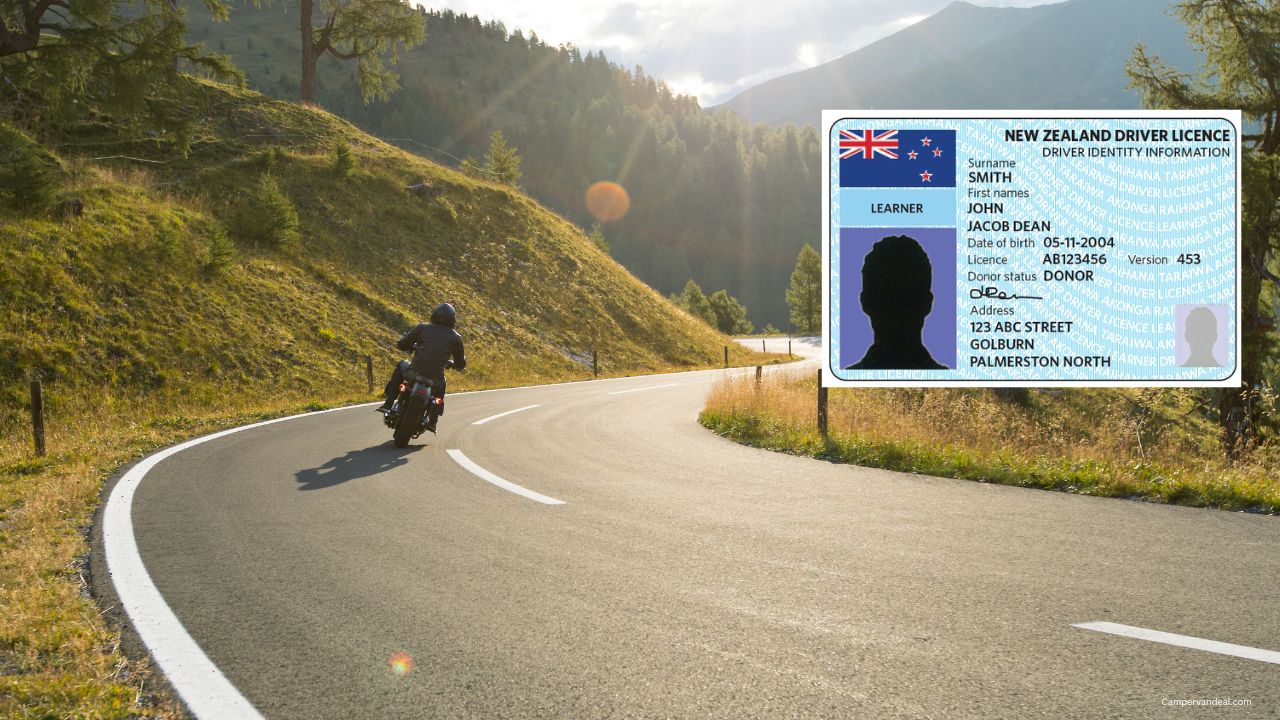
Getting a motorcycle licence in New Zealand is a three-stage process: learner (6L), restricted (6R) and full (6). It takes longer than most new riders expect, and the rules at each stage matter – break them and you’re looking at demerit points and a $100 fine. Here’s how it works today, plus what the 2027 licensing changes do and don’t mean for riders.
Stage 1: Learner licence (6L)
Before you can even sit the theory test, you need to pass a Basic Handling Skills Test (BHST) – a short off-road assessment run by approved training providers that checks you can control a bike at low speed, brake, turn and do a figure-eight. Most providers offer a training session and the test on the same day, and many will lend you a bike and gear.
With your BHST certificate in hand, you sit the computer-based theory test at a driver licensing agent: 35 multiple-choice questions, and you need 32 correct to pass. Study the official Motorcycle Road Code rather than the car version – some questions are bike-specific.
Learner conditions:
- Ride a LAMS-approved motorcycle (or moped/ATV)
- Display an L plate on the back of the bike
- No passengers
- No riding between 10pm and 5am
- No towing
Unlike learner car drivers, you don’t need a supervisor with you – which is exactly why the BHST exists.
Stage 2: Restricted licence (6R)
You can move to a restricted licence after holding your learner licence for at least six months. You have two routes:
- Practical riding test booked through NZTA, or
- CBTA 6R course (Competency-Based Training and Assessment) with an approved instructor. Completing CBTA removes the minimum learner period entirely, so a confident rider can move up much sooner.
The restricted conditions are the same as learner ones, minus the L plate: LAMS bike only, no passengers, no riding 10pm–5am, no towing.
Stage 3: Full licence (6)
How long you spend on your restricted depends on your age and whether you do CBTA:
- Under 25: 18 months on your restricted (and you must be at least 18), or 12 months if you complete a CBTA 6F course (minimum age 17½). You can’t sit CBTA 6F until you’ve held your 6R for at least nine months.
- 25 and over: six months on your restricted, or three months with CBTA.
Once you hold a full class 6, the LAMS restriction disappears and you can ride any legal, registered motorcycle and carry a passenger.
Is CBTA worth it?
For most riders, yes. It costs more than the standard NZTA test fee, but it’s real one-on-one road training with an instructor, it shortens your time at each stage, and many riders find it far less stressful than a one-shot test. Shop around – prices and course formats vary between providers, and ACC-subsidised Ride Forever courses are a cheap way to keep improving.
What about the 2027 licensing changes?
The Government has confirmed an overhaul of the graduated driver licensing system that takes effect on 25 January 2027. The headline changes – scrapping the full licence practical test and lowering the full licence fee – apply to class 1 car licences.
Two changes that riders should watch:
- Zero alcohol for all learner and restricted licence holders, regardless of age.
- Eyesight checks only at your first licence application and at renewals – this one applies to class 6 motorcycle licences too.
NZTA hasn’t yet published full detail on how every change applies to class 6, so if you’re starting your licence now, check NZTA’s driver licence pages before you book anything.
Quick checklist for new riders
- Book a BHST with an approved trainer.
- Study the Motorcycle Road Code and sit your theory test.
- Buy a LAMS-approved bike – check the NZTA LAMS list before you buy, not after.
- Get proper gear: helmet, armoured jacket, gloves, pants and boots.
- Decide early whether you’ll take the CBTA route.
- Book Ride Forever training – it’s useful at every stage.
Licence rules and fees change. Always confirm current requirements with NZTA Waka Kotahi before booking a test or course.